

Methodology
& Philosophy

Fun works. Fun transforms.
Our workshops do not teach people to perform — they change how they operate.
We help people recognise:
The roles and masks they perform at work
The fear of looking foolish that limits contribution
The habits that block connection and collaboration
And we help teams to develop:
Connection: people see each other more clearly and relate with less defensiveness
Collaboration: increased responsiveness, listening, and shared attention
Creativity: reduced inhibition and greater willingness to try, fail, and iterate
Resilience: comfort with uncertainty and failure, without collapse or withdrawal
Embodiment: improved awareness of instinct, energy, and presence
The result is: less fear, isolation, and rigidity — more trust, adaptability, and shared momentum.

Methodology
Corporate Clown is grounded in European clown and physical theatre practices — particularly those of Philippe Gaulier and Jacques Lecoq — alongside devised theatre and ensemble-based performance.
Not balloons or face paint — a serious practice of play, presence, and connection.
At the centre of our method is the concept of le jeu – the game.
This structure provides a shared focus between participants. Within that structure, it provides freedom — to respond, to fail, and to try again, together.
A key part of the process is identifying how individuals ‘hide’. This work gently exposes these patterns and offers alternatives, without calling people out or putting them on the spot.
Our method encourages and embraces failure without shame as the greatest way of learning, growing and relating to others. Treating failure as a collective joy for the whole room removes the personal stakes of ‘getting things wrong’ and enables people to stay present instead of retreating. Making friends with failure and denying the shame of it leads to bigger and bolder impulses, more freedom, more connection, and more creativity.

Philosophy
Corporate Clown is not performance. It is a way of being you.
At its simplest, clown is you at your most playful, vulnerable, and responsive. It is not about being funny — though that is often the effect. It is about being honest — in your body, in the moment, and with other people.
When people drop their guard, even briefly, connection becomes immediate. Teams that struggle with communication, hierarchy, or trust are rarely lacking capability but in compassion, they are operating behind layers of protection: fear of failure, self-consciousness, defensiveness.
Clowning creates the conditions where those layers fall away.
Play is central to this. It brings our full attention to the moment and to each other.
This is how high-performing teams operate – attentive, responsive, and able to adjust quickly. They are also capable of learning and growing — together — through mistakes and failures.
Our methodology is designed to remove the panic of failure.
In most professional environments, people are trained to minimise mistakes or failures and to manage perception. In our work, failure is surfaced, shared, and moved through. When something doesn’t work — and is acknowledged — it becomes a point of connection, not a point of shame.
This changes how people relate to risk, to each other, and to themselves. A team that is able to acknowledge mistakes and failures and vulnerabilities is a team with ultimate trust and confidence.
Clowning also restores embodiment. Many people operate almost entirely cognitively, disconnected from physical impulse and instinct. This disconnection underpins burnout, anxiety, and creative block.
By working through the body — through impulse, timing, and responsiveness — people rebuild trust in their own instincts and become more present, flexible, and responsive.
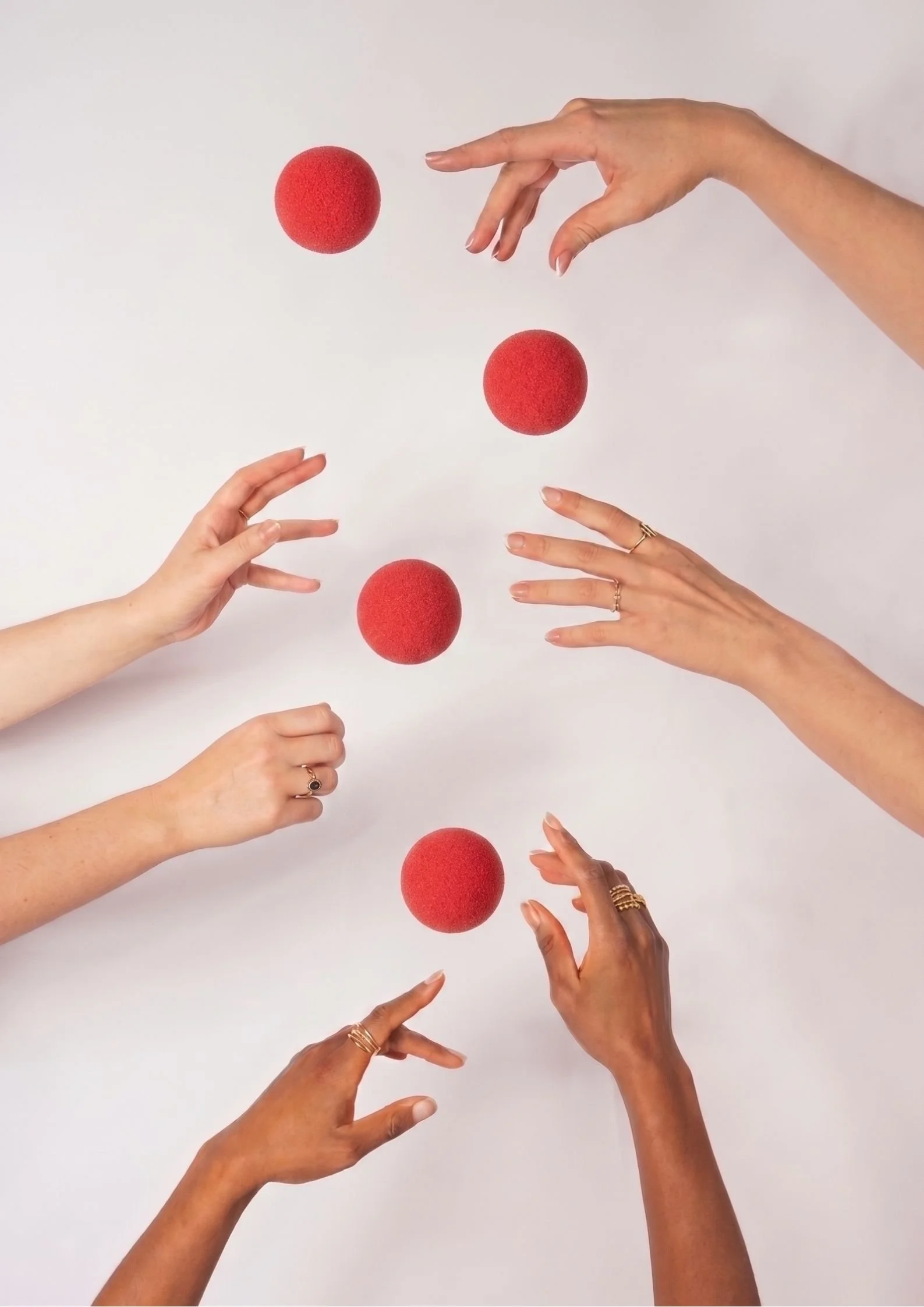
Our difference
This is not improv.
It is not stand-up.
It is not just performance training.
Most approaches in this space focus on output — being quicker, sharper, more confident, more impressive, slicker, and more able to cover up mistakes. But they do not address the underlying issues people are facing within themselves with the pressures of a team.
We address the underlying behaviours that shape how people show up: self-consciousness, fear of failure, defensiveness, disconnection from the body, and the habits people use to protect themselves in group settings.
Where improv often rewards speed and wit, we reward sensitivity and responsiveness.
Where stand-up centres control and delivery, we centre vulnerability and shared experience.
Where traditional training can reinforce performance, this work strips it back.
The shift is from performing to relating; from controlling to responding; from thinking to sensing; from avoiding failure to harnessing it.
That is why the impact is different — because it does not layer new skills on top of existing behaviour. It changes the behaviour itself — how people connect, collaborate, take risks, and create together.